July 2026 Fuel Price Update
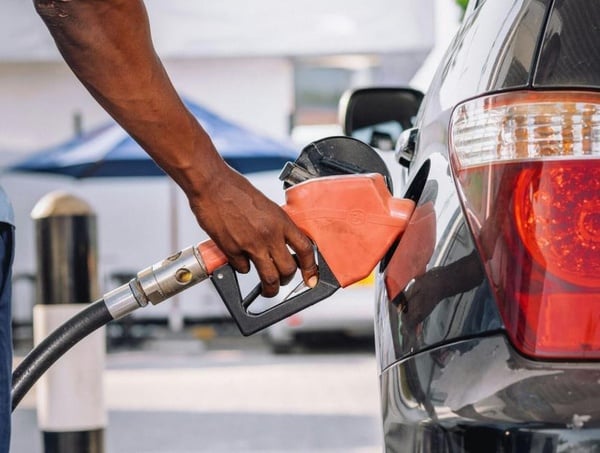
Motorists tracking the South African fuel landscape can breathe a massive sigh of relief as we head into the official July 2026 price adjustments. If you read our June update, you know we warned that July was highly likely to bring a heavy, tax-driven hike as the remaining 50% of the government's temporary fuel levy relief expires.
However, a continued, dramatic collapse in international oil markets has completely flipped the script. Instead of a tax sting, South African drivers are looking at massive, across-the-board price cuts for both petrol and diesel.
Here is everything you need to know about the final projected fuel price adjustments that will take effect at pumps on Wednesday, 1 July 2026.
July 2026 fuel price outlook
According to the late-June data provided by the Central Energy Fund (CEF), surging international over-recoveries (savings) have far outpaced the return of taxes. The final projected net changes at the pump are shaping up as follows:
Petrol 93: Expected decrease of around R1.32 per litre.
Petrol 95: Expected decrease of around R1.37 per litre.
Diesel 0.05% (Sulphur): Expected decrease of around R2.57 per litre.
Diesel 0.005% (Sulphur): Expected decrease of around R2.96 per litre.
Note: These figures are based on mid-to-late June data and do not account for final minor adjustments to the Slate Levy or retail margins by the Department of Mineral and Petroleum Resources.
Markets vs. taxes
Just like last month, the July adjustment is a battle between two powerful forces—but this time, the global market has won by a knockout.
The good news
The major driver behind this relief is a massive drop in global energy markets. The geopolitical anxieties surrounding the US-Iran conflict, which originally closed the strategic Strait of Hormuz and spiked Brent Crude past $100 a barrel earlier this year, continue to ease. Following a tentative 60-day ceasefire breakthrough, Brent Crude has tumbled further, hovering around the $ 80–$83 per barrel mark.
Compounding this, the South African Rand has shown uncharacteristic resilience, strengthening towards R16.15-R16.40 against the US Dollar as risk appetite returns to emerging markets. Together, these factors created enormous basic fuel over-recoveries:
Petrol achieved an international over-recovery of roughly R2.82 to R2.87 per litre.
Diesel achieved an astonishing over-recovery of R4.53 to R4.92 per litre.
The bad news
As announced by Minister of Finance Enoch Godongwana, the National Treasury's temporary R17.2 billion emergency tax intervention has officially come to an end. After phasing back 50% of the relief in June, the remaining half of the General Fuel Levy will be reinstated on 1 July 2026.
Petrol taxes will increase by another R1.50 per litre, returning the levy to its full baseline rate of R4.10.
Diesel taxes will increase by R1.96 per litre, returning the levy to its full baseline rate of R3.93.
Both petrol and diesel win in July
In June, petrol drivers lost because a minor 44-cent market recovery couldn't absorb a R1.50 tax hike. July is a completely different mathematical story.
Because international price drops are so large (nearly R2.90 for petrol and close to R5.00 for diesel), there is more than enough cushion to absorb the government's tax reintroduction. For petrol, a ~R2.87 market drop easily absorbs the R1.50 tax, leaving consumers with net savings of over R1.30 per litre. For diesel, the spectacular market performance leaves nearly R3.00 of pure relief on the table.
The upcoming July cuts are a major relief, but they still don't get us back to the baseline we enjoyed before the U.S.–Iran conflict kicked off in late February 2026.
To give you the exact perspective for your article, look at how the projected July inland prices stack up against the March 2026 prices—which were the last set of pump prices calculated before the conflict truly rattled global markets and forced the government's emergency tax cuts.
Before-and-after comparison (inland prices)
| Fuel grade | March '26 | May/June '26 | July '26 | Increase |
|---|---|---|---|---|
| Petrol 95 | R20.50 / L | R28.06 / L | R26.76 / L | ~R6.20 more |
| Petrol 93 | R20.19 / L | R27.95 / L | R26.60 / L | +R6.41 more |
| Diesel 0.05% | R21.28 / L | R29.26 / L | R26.36 / L | +R5.08 more |
Why aren't we closer to March prices?
Even though international crude oil has dropped all the way back into the low $80s following the June 14 ceasefire and the reopening of the Strait of Hormuz, we are left with a permanent structural wound: the total loss of the tax cushion.
The R6+ core market spike: When the conflict peaked in April and May, Brent Crude surged past $101 a barrel, causing a historic R3.27 petrol spike and an unprecedented R6.19 single-month leap for diesel. July's over-recoveries correct a massive chunk of that market shock, but not all of it.
The Tax reintroduction weight: Remember that in March, the General Fuel Levy (GFL) was built into the price normally. When the war started, the Treasury stepped in to temporarily slash taxes to cushion the blow. Because those tax breaks are ending entirely on July 1, the return of the full R4.10/L petrol levy and R3.93/L diesel levy effectively adds a heavy floor to how far the pump prices can drop.
So while the July cuts will successfully take the edge off the mid-year crisis, motorists are still looking at a structural increase of R5.00 to R6.50 per litre compared to the relatively peaceful start of the year.
Looking ahead
While July brings an unexpected mid-winter reprieve, market analysts caution that the second half of 2026 remains highly volatile. The permanent removal of the tax safety net means South African motorists are now fully exposed to global oil market shocks. If the fragile Middle Eastern peace agreements stumble, or domestic political movements rattle the Rand, the buffer is gone.
For now, enjoy the relief at the pumps this July!
